
I remember the exact moment I understood that education was broken.
I was sitting in a history class in school, listening to a teacher read dates and events from a textbook. The Mughal Empire. The Battle of Plassey. The Revolt of 1857. Names, years, places — delivered in the same flat cadence as a railway announcement.
And I had a thought that changed everything for me:
What if we didn't learn this from a textbook? What if we could see it — really see it — like a movie? Real kings, real people, real battles, real emotion. Not words on a page, but a world you could step into.
I didn't have the vocabulary for it then. I didn't know about neural coupling, emotional encoding, or the amygdala's role in memory formation. I just knew, with the certainty of a student who was bored out of his mind, that there had to be a better way.
That thought never left me.
From a Classroom Thought to a Book
Years later, when I started building Dreavi, I kept returning to the same question: why do people fail to achieve what they're capable of? The answer, I discovered, was almost never about intelligence or lack of information. Information was everywhere.
What was missing was architecture.
The systems that should have developed their capabilities — that should have personalized their learning, sustained their motivation, connected their education to their aspirations, and guided them from knowing to doing — didn't exist. What existed instead was a 200-year-old factory model. A model designed to treat every human mind as identical, deliver information through the least engaging medium possible, test memorization instead of capability, and systematically destroy the curiosity every child arrives with.
Why This Book, Why Now
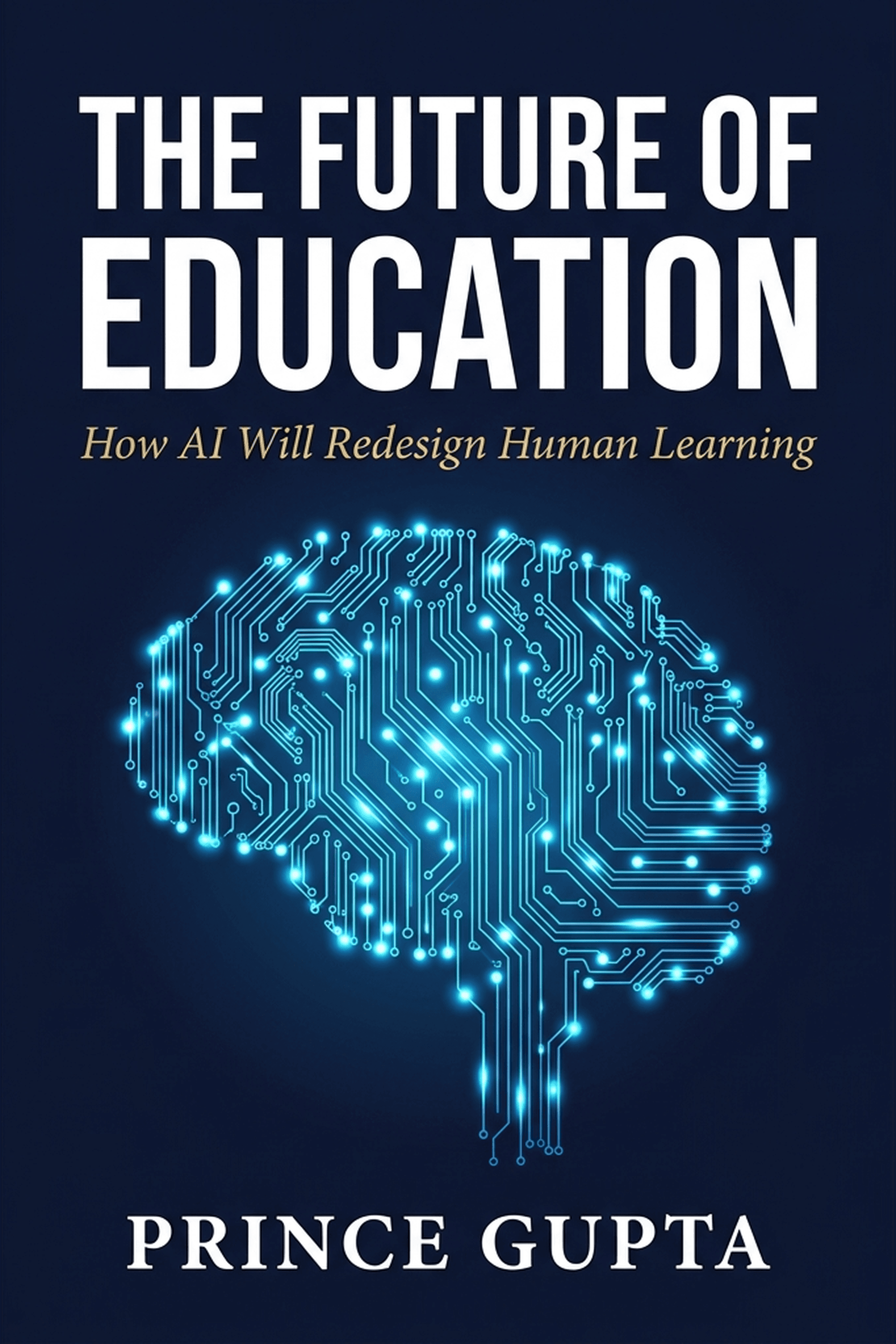
I wrote The Future of Education: How AI Will Redesign Human Learning because we are at a turning point.
For the first time in human history, we have the technology to build educational systems that actually align with how the human brain learns:
- AI can personalize instruction for every learner.
- Immersive content can make any subject as engaging as the best film.
- Intelligent mentors can guide human development over years and decades.
- Psychology engines can sustain motivation through the inevitable difficulties of growth.
- Execution frameworks can connect learning to the dreams that give it meaning.
This is not a book about making school slightly better. It is a book about redesigning human learning from first principles.
Find the exact pattern blocking your execution — in 60 seconds.
Ready to turn this into action?
Dreavi breaks your dream down into structured, actionable steps — an Agentic Goal-Achieving Platform designed to sustain momentum.
Free • Agentic Goal-Achieving Platform
The Core Argument
The education system isn't broken. It's working exactly as designed — for a world that disappeared fifty years ago.
The distance between where education is today and where it could be is enormous. The institutional inertia is real. But consider this: the distance between where the internet was in 1995 and where it is today was also enormous.
AI-powered education is at its 1995 moment. The technology works. The need is desperate. The economics are viable. What remains is the will to build — and the wisdom to build it right.
Who This Book Is For
For founders building the future of learning. For teachers ready to be freed from the factory model. For parents who sense something is wrong with how their children are educated. For anyone who believes that education is the most important design problem of our time.
15 chapters. Neuroscience. AI. Psychology. And a vision for education designed around how humans actually learn — not how institutions prefer to teach.
Read The Future of Education on Amazon →
Available on Kindle ($5.99 / ₹449), Paperback ($14.99), and Hardcover ($24.99).